
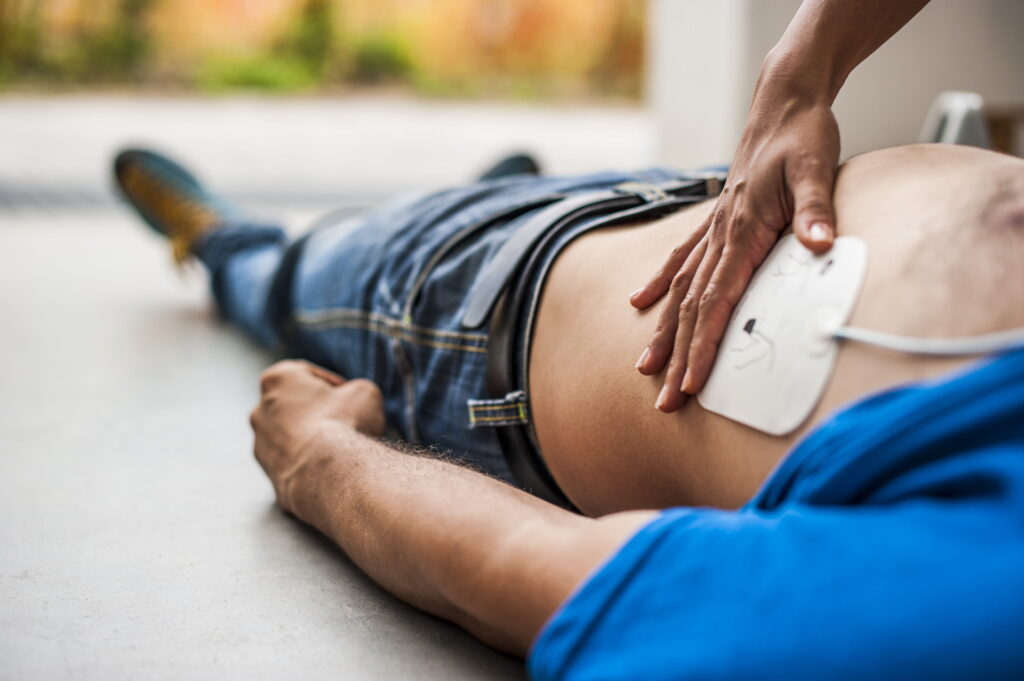
When someone suffers a sudden cardiac arrest, every second counts. Without immediate intervention, survival rates decrease by around 10% for every minute that passes without CPR and defibrillation. This is why defibrillator training has become an essential part of workplace safety, giving employees the confidence and skills to act quickly during a life-threatening emergency.
Whether you manage an office, school, warehouse, care setting or community organisation, investing in defibrillator training can help save lives and create a safer environment for everyone. Combined with CPR skills, knowing how to use an Automated External Defibrillator (AED) ensures that staff are prepared to respond effectively when it matters most.
The Importance of Rapid AED Use
A sudden cardiac arrest occurs when the heart unexpectedly stops pumping blood around the body. Unlike a heart attack, which is caused by a blockage in blood flow to the heart, cardiac arrest causes the heart to stop beating effectively, resulting in unconsciousness and the absence of normal breathing.
In these situations, immediate action is vital. The best chance of survival comes from the combination of:
* Calling emergency services
* Starting CPR immediately
* Using an AED as quickly as possible
An AED is designed to analyse the heart’s rhythm and, if necessary, deliver a controlled electric shock to help restore a normal heartbeat. Modern AEDs are user-friendly and provide clear voice instructions throughout the process, making them suitable for use by trained first aiders and members of the public alike.
However, while AEDs are designed to be straightforward, expert defibrillator training helps individuals feel more confident, respond more quickly and avoid hesitation during a high-pressure situation.
What Does Our Defibrillator Training Include?
Our defibrillator training combines practical demonstrations with hands-on learning to ensure participants understand both the theory and practical application of AED use.
Our defibrillator training in Essex covers:
Understanding Sudden Cardiac Arrest
Learners gain an understanding of what cardiac arrest is, how to recognise the signs and why rapid intervention is critical.
Assessing the Situation Safely
Participants learn how to assess a casualty, check for responsiveness and identify whether CPR and defibrillation are required.
CPR Techniques
Effective chest compressions are a crucial part of the chain of survival. Many ‘CPR training courses near me’ searches result in courses that combine CPR and AED instruction because the two skills work together to improve survival outcomes.
Using an AED Correctly
Our practical exercises teach learners how to:
* Switch on the device
* Attach electrode pads correctly
* Follow voice prompts
* Deliver a shock safely if advised
* Continue CPR between analyses
Working as a Team During an Emergency
Participants will learn how to communicate effectively, coordinate with colleagues and support emergency services upon arrival.
At Learning & Support Services (LSS), our Essex first aid training includes CPR and the safe use of an AED as part of a comprehensive emergency response programme.
Common Fears and Myths About Defibrillators
Despite the increasing availability of AEDs, many people remain nervous about using them. Fortunately, most concerns can be addressed through proper defibrillator training.
Myth 1: “I Might Make Things Worse”
This is one of the most common fears. In reality, a person experiencing cardiac arrest is already in a life-threatening situation. Taking action provides the best chance of survival.
Myth 2: “AEDs Are Complicated”
Modern AEDs are specifically designed for use by non-medical individuals. They provide step-by-step voice instructions and will only deliver a shock if it is clinically appropriate.
Myth 3: “I’ll Be Liable if Something Goes Wrong”
People acting in good faith to help someone during an emergency are generally protected under the Social Action, Responsibility and Heroism Act 2015 (SARAH). Delaying action due to fear is often far more dangerous than attempting to help.
Myth 4: “Only Medical Professionals Can Use Defibrillators”
Anyone can use an AED. However, our defibrillator training helps users feel more comfortable and confident in responding quickly during a real emergency.
AEDs in Schools, Businesses and Community Spaces
AEDs are becoming increasingly common across the UK, and for good reason.
Schools
Teachers and support staff may be required to respond to emergencies involving pupils, parents, visitors or colleagues. Schools that invest in defibrillator training ensure staff can act quickly and confidently if a cardiac emergency occurs.
Businesses
Employers have a duty to provide a safe working environment. Incorporating defibrillator training alongside our emergency first aid at work training strengthens workplace preparedness and demonstrates a commitment to employee wellbeing.
Community Spaces
Sports clubs, community centres, places of worship and public venues often have AEDs available on-site. Ensuring volunteers and staff have completed our defibrillator training can significantly improve emergency response times and potentially save lives.
As organisations continue to prioritise health and safety, AED awareness is becoming just as important as fire safety and manual handling training.
LSS’s CPR + AED Combined Courses in Essex
At Learning & Support Services (LSS), training is delivered with the same commitment to safety, professionalism and community support that underpins all areas of the organisation. As a family-run Essex-based provider, LSS offers engaging, practical training designed to build confidence and competence in real-life situations.
LSS delivers hands-on first aid training that includes CPR and AED use, helping organisations, schools, charities and individuals develop life-saving skills. The training combines practical exercises, real-world scenarios and expert guidance to ensure learners feel prepared to respond effectively during an emergency.
Whether you’re looking to strengthen workplace compliance through emergency first aid at work training, searching for ‘CPR training courses near me’, or wanting to improve your team’s emergency preparedness, LSS can tailor training to meet your needs.
Training can be delivered at your workplace or at training venues across Essex, from Brentwood to Maldon, Chelmsford to Southend (and anywhere between), providing flexible options for businesses, schools, care providers and community organisations.
Conclusion
Sudden cardiac arrest can happen anywhere and at any time. Having access to an AED is important, but having people who are confident enough to use it is what truly saves lives.
Investing in defibrillator training equips individuals with the skills to recognise cardiac arrest, perform CPR and use an AED quickly and effectively. For workplaces, schools and community organisations, it is a simple yet powerful way to improve safety, protect people and potentially save a life.
If you’re looking for professional defibrillator training in Essex, LSS provides practical, engaging courses that help learners develop the confidence to act when every second matters.
Feel free to contact us today to discuss your defibrillator training needs.